



Residential care
Residential care in Ludlow
For people who are finding everyday life harder at home: help with washing and dressing, medicines and meals, someone there at night, and company whenever it's wanted.


What it includes
Help with the everyday, at their pace.
- Help with washing, bathing, dressing and getting about
- Medicines given at the right times, and reordered for you
- Three meals a day, with drinks and snacks whenever they're wanted
- Someone awake and on hand all night
- Laundry, cleaning and the small jobs
- GP, dentist, optician and chiropodist visits arranged at the home
- Things to do every day, and no pressure to join in

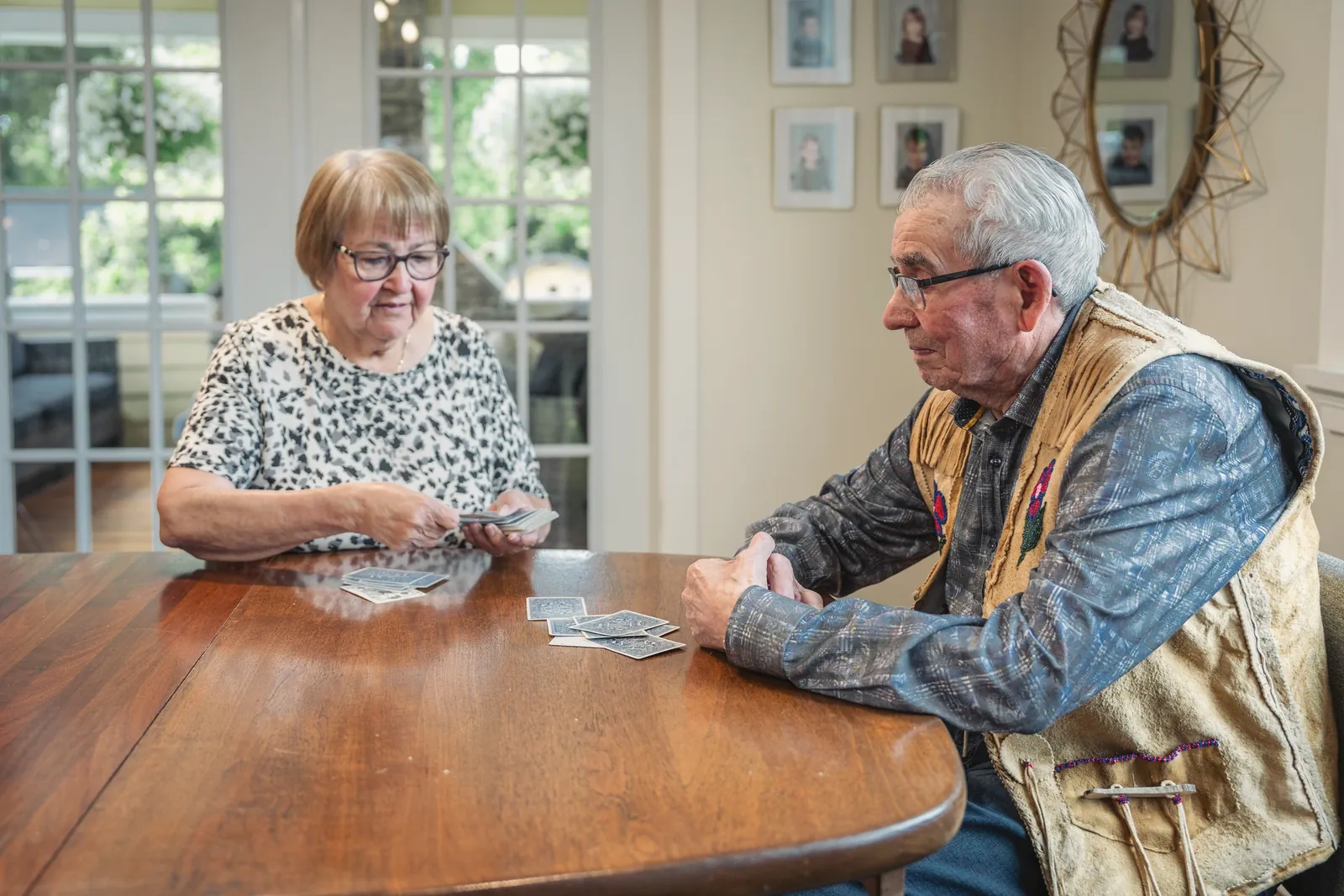
Independence
We help with what's needed, and no more.
Moving into a care home shouldn't mean giving up the things you can still do. If your dad likes to make his own tea, shave himself or walk to the shop with a carer, that goes into his care plan, and we plan round it.
As needs change, the plan changes with them. Because we're registered for nursing and dementia care too, most people never have to move again.
Questions families ask
Residential care, answered.
What's the difference between residential and nursing care?
Residential care is help with everyday life from trained carers. Nursing care adds registered nurses for medical needs, such as wound care, injections or complex conditions. If you're not sure which your relative needs, we'll help you work it out when we meet them.
Can my mum keep her own GP?
Often, yes, if her surgery covers Damsonfield. If it doesn't, we'll help her register with a local practice that visits the home.
What if their needs change?
We review every care plan at least once a month, and straight away if something changes. If someone comes to need nursing or dementia care, they can usually stay in their own room.
Other care at Damsonfield
If needs change, we can still help.
- Nursing careRegistered nurses on duty around the clock, for medical and complex needs.
- Dementia careThe Orchard: a calm part of the house with its own garden, for people living with dementia.
- Respite careA stay of a week or more: while you have a break, or after time in hospital.
- End-of-life careComfort and dignity at the end of life, with the family close by.